The Night They Jumped
My grandfather only ever told me one story about the war.
The story I had
He was a pilot. One night he had to bail out of his plane, and his navigator didn’t want to jump, so my grandfather kicked him out. When he pulled his own ripcord, he said, it was the worst pain of his life.
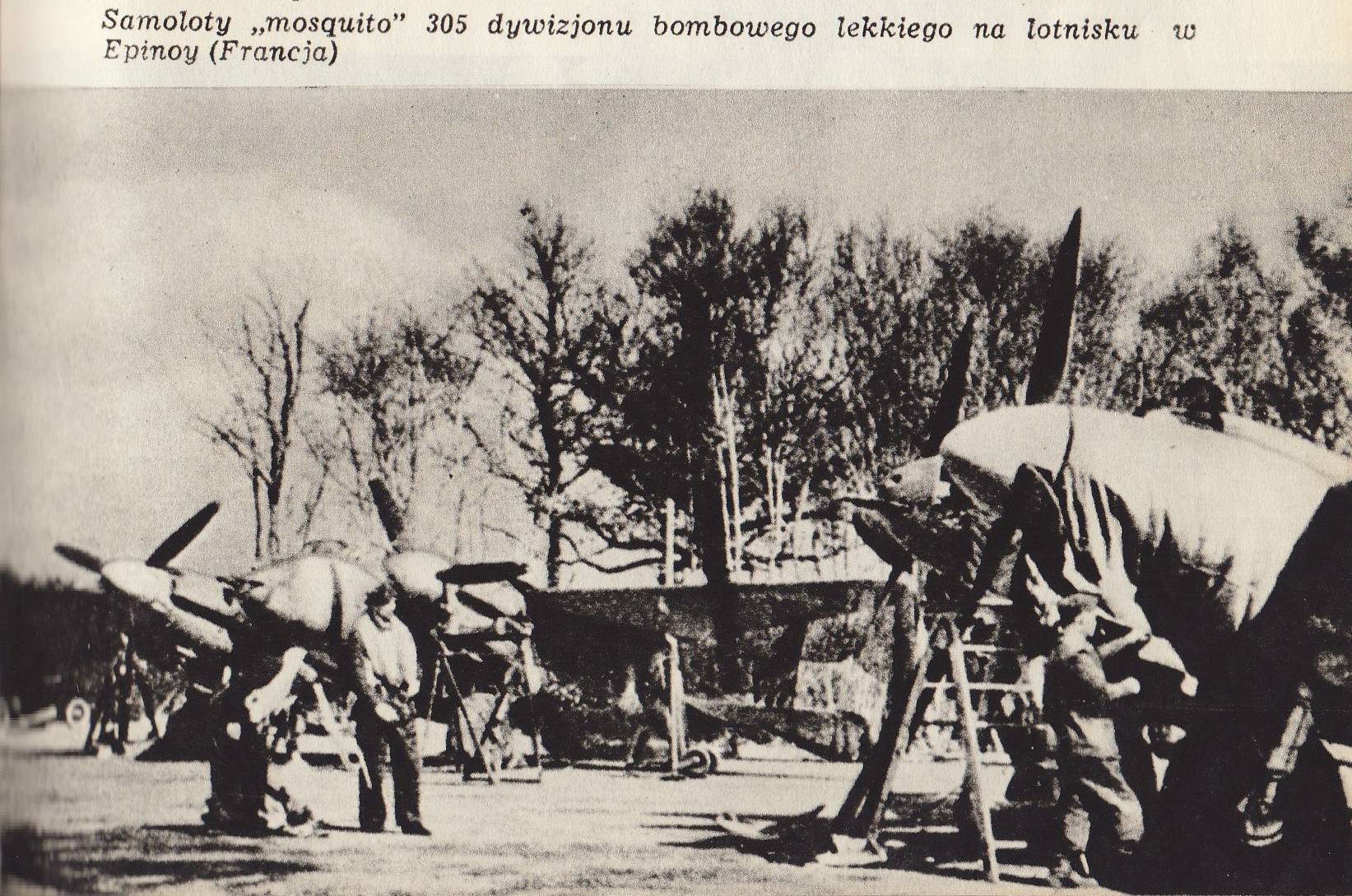
That was about it. Everything else came in bits and pieces from family. He flew for the Royal Air Force. He was Polish, or maybe Romanian. He might have flown with a Polish squadron. He spent some time in Africa. He flew a Mosquito.
Why AI, and why now
World War II is recent enough that a lot of the records still exist, and a surprising amount of them are online. Squadron histories, operations logs, award rolls, old letters. Plenty is still sitting in archives, but plenty isn’t.
So one weekend I gave those scraps to ChatGPT (the Sol model) and asked it to do deep research and build a timeline of his service.
It took a while. The first pass ran at least fifteen minutes. It kept coming back with “I think I found a link. Do you want me to research this further?” I always said yes.
Both versions were right
The first thing it cleared up was the Polish-or-Romanian question. He was born in 1921 in Czernowitz, a city that was Romanian at the time, into a Polish family. So the answer was both, and he went to war as a Pole.
Africa turned out to be real too. It found him on a roster of the Polish Carpathian Rifle Brigade, which fought at the siege of Tobruk in 1941. Before he ever flew a plane, he was a rifleman in the Libyan desert.
One number off
The part I couldn’t figure out was how a rifleman in Libya ended up flying Mosquitos over Germany.
This is where it got cool. The AI found his service number, 704205. Then it found the man with the number right before his, 704204, whose path is well documented: out of Poland, through Romania, into the Polish army in the Middle East, the desert, and then off to Britain in 1942 to join the Polish Air Force.
Those numbers were handed out in order as men were processed. Two in a row means they were almost certainly in the same group, maybe standing in the same line. So my grandfather most likely took the same route. Nobody in my family knew that, and the AI pieced it together from someone else’s record.
The night they jumped
Then it found the story he told me.
In November 1944 his squadron moved to a new airfield in France. A few nights later, he and his navigator, Tomasz Wilczewski, took flak on a patrol over the Dutch-German border. On the way back they couldn’t find the new base in the dark, and a German night fighter had them on radar. He turned south toward Allied territory and kept going until it was time to get out.
According to the squadron’s records, the escape hatch jammed and took several kicks to open. My grandfather remembered kicking his navigator. Maybe it was a little of both.
They both came down safe in France. Locals handed them over to some confused American MPs, Wilczewski in his dress uniform and my grandfather in a tracksuit. They were back with the squadron the next day.
Reading that, I just stopped and stared at the screen for a while. It really painted a picture.
The part he never mentioned
A few months later, in February 1945, he flew a daylight raid into northern Germany. He bombed a freight train, then kept circling back to strafe it while the flak got heavier, until it knocked out one of his engines. He flew the Mosquito home on the one he had left.
For that, he was awarded the Silver Cross of the Virtuti Militari, Poland’s highest decoration for valor.
After the war he didn’t go back to Poland. He came to the United States and worked as a furrier in Brooklyn.
It wasn’t push-button
The finished report looks polished, but getting there was messy. ChatGPT’s research was all over the place, with real finds mixed in with dead ends across a lot of long threads. I ended up piecing the timeline together by hand.
For the writing I switched to Claude, which I think is the better writer. I gave Opus the facts, family photos, and documents, and asked for a story, not a memory book. Even that took a lot of back and forth to get the format the way I wanted.
It was worth it. Most of what’s in the report, nobody in my family knew a month ago.